- (562) 614-0378
- hello@measlaw.com
Can I Use That Song in My Reel?
Table of Contents
A 5‑Minute Copyright & Fair‑Use Espresso ☕️
Quick Sip Takeaways ☕️
- Use the platform’s own music library and you’re (usually) golden on that platform — keep the video there and follow its Music Guidelines.
- Ripping the latest chart‑topper from Spotify? Expect a mute, takedown, or legal heat.
- “Under 10 seconds is safe” is pure latte‑foam; even a three‑note riff can be trouble.
- Smart alternatives: royalty‑free tracks, creator “no‑copyright” playlists, or TikTok’s Commercial Music Library.
Grab your mug; let’s decode the fine print without putting you into a post‑caffeine nap. Note: This breakdown focuses on U.S. law—check local rules if you’re sipping elsewhere!
1. Morning Vibes: Why Music Matters
Audio is the oat milk that froths up your social latte because studies show background tracks boost watch‑time, set mood, and nearly double engagement. But that “perfect vibe” doesn’t override copyright law. Before you drop Beyoncé under your brunch montage, here’s the quick‑start guide (no courtroom lingo required).
2. The Three‑Path Playlist
A) In-App, Pre-Cleared Tracks
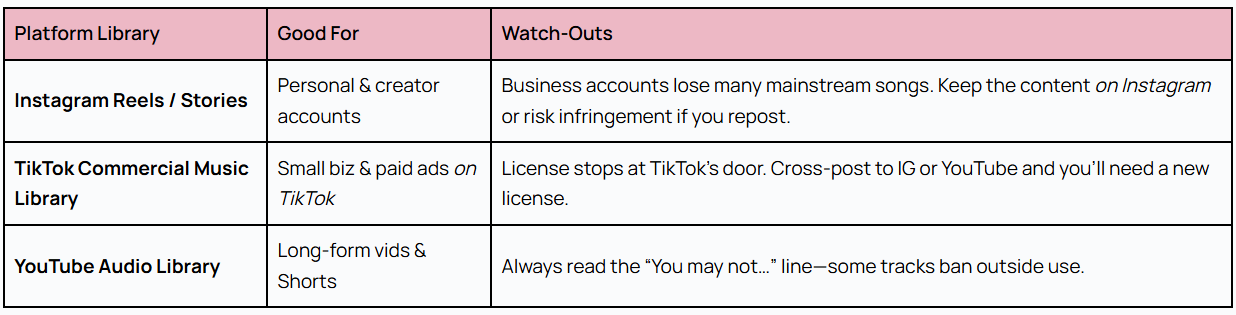
Think of these libraries as the coffee you bought inside the café—delicious, but no refills to-go.
B) Royalty‑Free / Stock Jams
Services like BenSound, Pixabay Music, and Epidemic Sound sell single‑track or subscription licenses.
- Pros: Safe on every platform (assuming you follow their terms).
- Cons: Some tiers ban TV or political ads; others require on‑screen credit. Read the label like you would oat‑milk ingredients.
C) DIY Licensing (Major‑Artist Route)
If your heart is set on Taylor’s latest anthem, you’ll need:
- Master License – from the owner of the sound recording (often the record label).
- Sync License(s) – from every publisher/songwriter who owns the underlying composition (there can be multiple).
Expect dollars, lawyers, and a timeline longer than your cold brew queue.
3. Fair Use: The Four‑Factor Latte Art
Fair use weighs purpose, nature, amount, and market impact. Translation: commentary, parody, or education might fly—but lifestyle Reels usually don’t qualify (a dance video with a song isn’t transformative, sorry). Even if you believe fair uses applies, it’s case-by-case, so consult an attorney for nuanced scenarios. Platforms generally auto‑mute first and sort it out later. Filing a U.S. DMCA counter-notice can restore your post if you’re confident in your rights, but it’s risky – misjudge it, and you could face legal pushback
Pro Tip: Don’t assume fair use is off the table. Just tread carefully and get legal advice when in doubt.
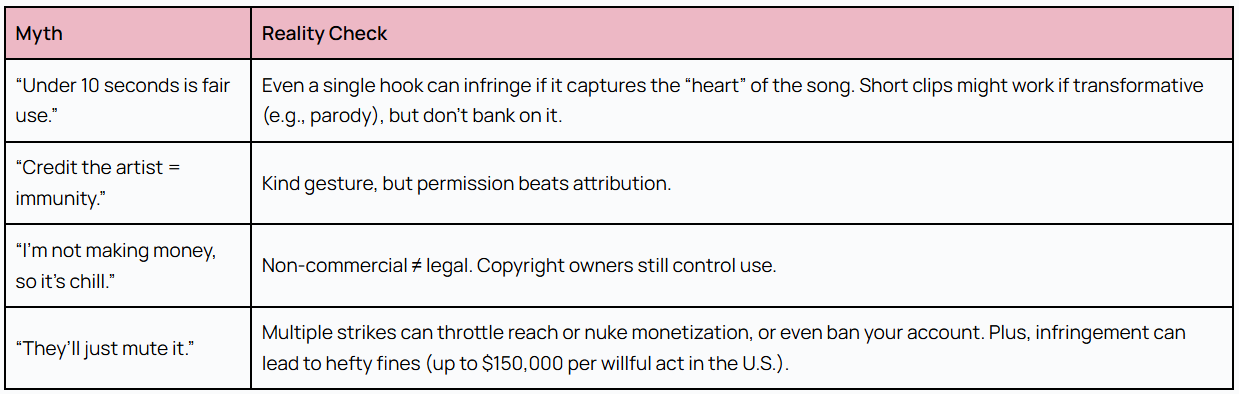
4. Myths That Need Muting 🎙️🚫
5. One‑Minute Compliance Flowchart
Pick a track →
Is it inside IG/TikTok/YouTube for your account type?
↳ Yes → Post, keep it on that platform → 🎉
↳ No → Is it royalty‑free & properly licensed?
↳ Yes → Save license PDF → 🎉
↳ No → Ready to secure BOTH master + sync licenses?
↳ Yes → Lawyer up, negotiate → 🎉
↳ No → Change the song or risk a takedown.
Cross‑posting? Re‑check every license before you hit upload elsewhere.
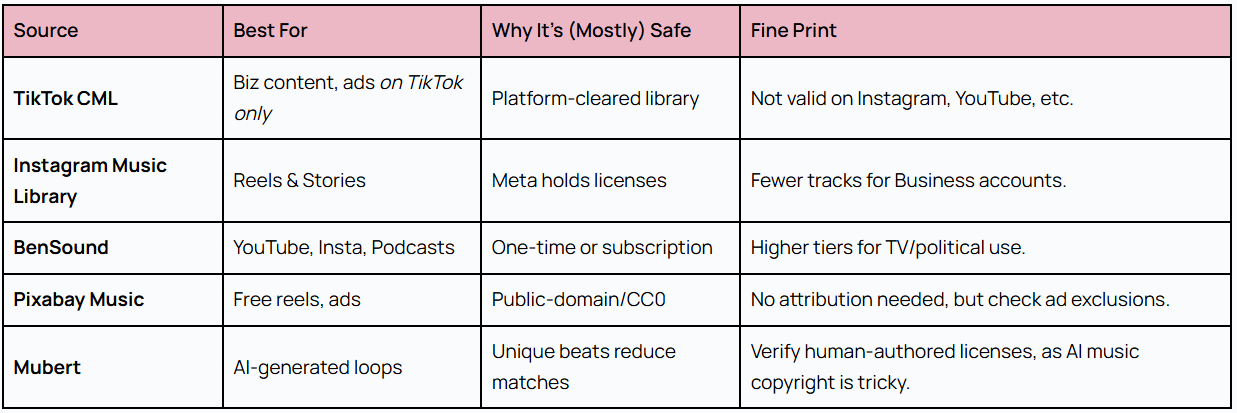
6. Quick‑Grab Playlists You Can Actually Use
7. Swipe‑Able Tips (Copy/Paste into Notes)
- Library tracks > uploads for algorithm love and legal safety.
- Keep receipts (emails, PDFs) in a folder labeled “Copyright Licenses.” California creators—these docs help you respond to DMCA claims.
- Switching to Business account? Re‑scan your audio choices; some favorites vanish.
- Original audio welcome! Record your dog snoring, layer a synth—instant composer.
- Go instrumental if you can; lyrics trigger content‑ID bots fastest.
8. FAQs – Latte Foam Edition
Q: Can lowering volume dodge detection?
A: Nope. Meta’s Rights Manager and YouTube’s Content ID match wave patterns, not decibels.
Q: What year is the public‑domain cut‑off?
A: In 2025, U.S. music published in 1929 or earlier is generally public domain (sound recordings have separate timelines). Sound recordings pre-1923 are free, but 1923-1929 recordings may be protected until 2044 or later (thanks, Music Modernization Act). Check both!
Q: My Reel got muted—am I doomed?
A: Delete or swap the track, or file a DMCA counter‑notice if you truly have rights (consult a lawyer as bad faith filings can spark legal trouble). Three strikes can cripple reach.
9. Future‑Proof Beats: A Note on AI Music
AI services like Mubert whip up one‑of‑a‑kind loops and claim royalty‑free peace of mind. Cool! But the law around AI‑generated content and training data is still brewing because some tracks may not be copyrightable without human creativity. Always verify the provider’s license claims and keep proof, as training data disputes could stir trouble.
10. Final Sips – What to Remember
- Libraries first, royalty‑free second, licensing last.
- Business accounts face stricter music limits—check before you post.
- Fair use = slim odds for lifestyle content, but not impossible
- Myth‑busting saves headaches (R.I.P. 10‑second rule).
- Proof of license is your oat‑milk shield—store it, or risk fines or bans.
☕️ Your Next Refill
Did this clear the static in your headphones? Drop a comment with your go‑to royalty‑free source. Want our printable “Music‑Use Cheat Sheet” PDF plus a curated playlist? [Grab it here] and follow @LegalBarista for recurring sips of legal sanity.
(Legal decaf: This post gives general info, not legal advice. Consult a professional for your unique blend.)
Disclaimer: This article is for general info only—not legal advice, and not a substitute for counsel (even if it sounds brilliant). 😊